
Why Photoluminescent Signage Matters in Educational Environments
 Educational facilities pose unique challenges in emergency scenarios. They are often high-occupancy spaces, with occupants ranging from small children to adults, many of whom may not be familiar with the layout of the building. In the event of a fire or blackout, confusion and panic can escalate rapidly. Photoluminescent signage provides a reliable and instantly recognizable guide toward safety, functioning independently of electrical systems that may be disrupted. These markings also support inclusive safety planning by offering clear visual cues that benefit individuals with limited mobility or sensory impairments during evacuation.
Unlike traditional battery-powered emergency lighting, photoluminescent markings absorb energy from daylight or artificial lighting and store it until needed. In a power outage, they immediately emit a visible glow that helps students, faculty, and staff locate stairs, exits, and safe pathways. For schools committed to both safety and sustainability, these self-illuminating, non-toxic egress signs offer a dependable, low-maintenance alternative with no hazardous material disposal requirements.
Proactive Inspection and Maintenance for Sustained Safety
Achieving code compliance is only the starting point of a long-term safety strategy. In educational environments where daily occupancy, building use, and regulatory oversight create constant change, regular inspection and maintenance are critical to ensuring continued performance. Total Fire Protection (TFP) offers comprehensive photoluminescent lighting inspections designed to meet the operational needs and safety expectations of schools at every level.
These inspections serve as more than a routine check. They function as a strategic safeguard, identifying potential deficiencies before they compromise emergency preparedness. Each inspection is conducted by a certified technician with specific expertise in the layout, usage patterns, and regulatory requirements of educational facilities.
TFP’s inspection services include: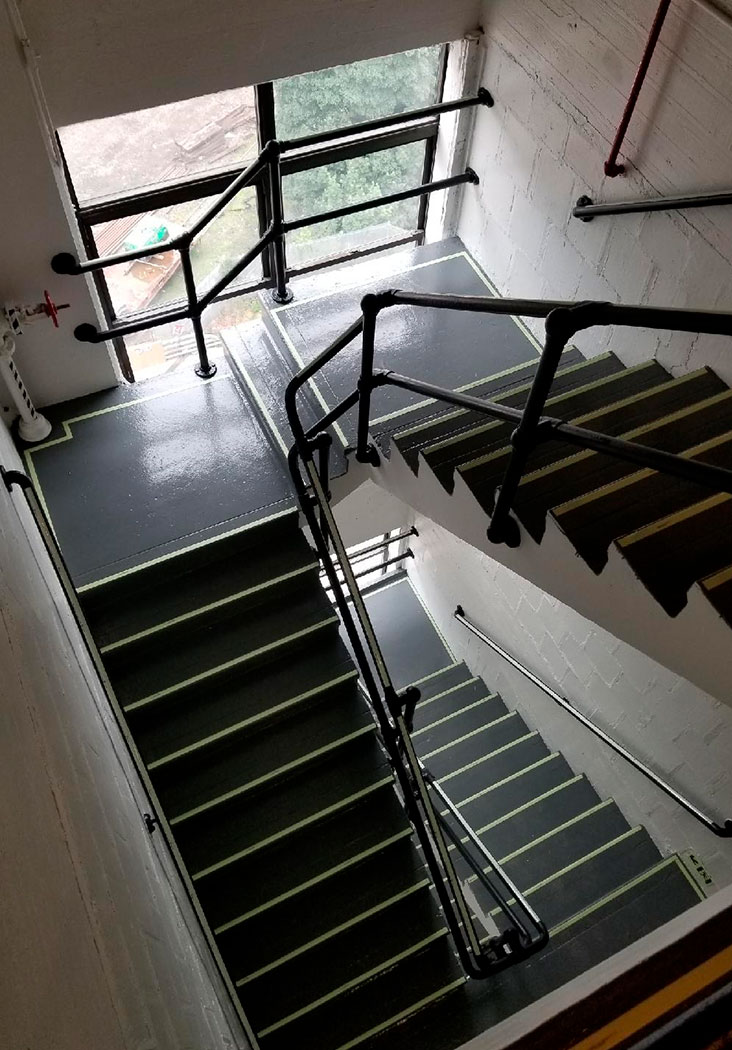
- Evaluation of signage under normal lighting conditions, ensuring that markings are properly placed, fully visible, and free from obstructions or wear that could diminish performance in an emergency.
- Assessment of physical condition and placement, verifying that all egress path markers, stair treads, door frames, and directional indicators are securely installed and aligned with current evacuation routes.
- Review of compliance standards across performance metrics, including brightness duration, surface flammability, chemical safety, washability, and the use of non-toxic, non-radioactive materials.
- Delivery of a formal inspection report that outlines all observations, identifies deficiencies, and documents technician credentials, inspection dates, and areas assessed.
- Actionable maintenance recommendations, including prioritized corrective steps and optional proposals for remediation, with supporting documentation for administrative planning and budgeting.
- Issuance or update of a facility-specific logbook, maintaining an official record of all inspections that can be referenced during audits or fire safety reviews.
For school systems that manage multi-story buildings, sprawling campuses, or entire district portfolios, TFP offers scalable inspection programs tailored to the complexity and volume of the environment. Whether overseeing a single institution or coordinating across multiple sites, facilities teams gain peace of mind knowing their photoluminescent safety systems are fully reviewed and professionally maintained.
While photoluminescent signage is engineered for durability, even the most resilient components require oversight. Routine inspections not only preserve regulatory compliance but also reinforce a culture of readiness that helps protect every occupant in every emergency scenario.
Proven Expertise in Educational Fire Protection
 Educational institutions across New York City and the Tri-State area rely on trusted partners like Total Fire Protection to meet the complex demands of campus safety. From public school districts to private academies and universities, creating safe, code-compliant learning environments requires both technical precision and a deep understanding of regulatory and operational challenges. Total Fire Protection brings decades of experience to each project, delivering solutions with the urgency and attention to detail that school facilities demand.
Photoluminescent signage plays a critical role in this broader safety infrastructure. These high-performance markings offer clear, non-electric egress guidance that supports safe evacuation and aligns with all applicable fire codes. Unlike systems that rely on batteries or wiring, they require minimal maintenance and remain dependable even during power outages or infrastructure failures. As administrators prepare campuses for the academic year, ensuring that these systems are installed, inspected, and fully functional is an essential component of any safety strategy.