- Fire Log Books are required by NFPA and NYC Fire Code, serving as the official record of inspection, testing, and maintenance activities.
- Documentation gaps equal violations even if systems are operational, missing log entries can trigger fines, liability, or shutdowns.
- Log books cover multiple systems, including alarms, elevators, exit lights, extinguishers, generators, sprinklers, smoke detectors, and evacuation drills.
- NFPA standards drive recordkeeping, with NFPA 25, NFPA 72, and NFPA 101 mandating specific intervals for inspections and documentation.
- NYC compliance is strict, with FDNY inspectors requesting Fire Log Books first during audits and enforcing heavy penalties for missing records.
- Common violations are preventable, from unlogged extinguisher checks to missing alarm tests and incomplete evacuation drill documentation.
- Fire Log Books are a risk management tool, supporting insurance claims, staff accountability, audit readiness, and long-term operational resilience.
- Non-compliance is costly, with fines, penalties, and insurance disputes far outweighing the modest cost of updated 2025 Fire Log Books.
Fire protection is not only about sprinklers, alarms, or extinguishers. It is also about documentation. Across New York City and throughout the United States, fire codes require building owners and managers to maintain detailed records of inspection, testing, and maintenance activities. This documentation is more than paperwork; it is the foundation of compliance with NFPA standards and local fire codes. Without it, even a well-equipped building can face violations, costly fines, and potential shutdowns.
Fire Log Books are the industry standard for maintaining this documentation. They serve as a daily record of safety checks, system status, and corrective actions, providing proof to inspectors that your facility is both code compliant and responsibly managed. For property managers, facility directors, and safety officers, Fire Log Books are not optional. They are your building’s first line of compliance.
The Compliance Gap: Why Documentation Matters as Much as Equipment
Every building is required to maintain fire and life safety systems, from fire alarms and sprinklers to emergency lighting and evacuation plans. However, the FDNY and other Authorities Having Jurisdiction (AHJs) do not simply verify that equipment exists. They evaluate whether it is maintained, tested, and recorded in accordance with NFPA inspection, testing, and maintenance (ITM) schedules.
This is where many facilities fall short. Systems may be present and operational, but without accurate log entries, inspectors have no proof that they are functioning as required. Even if systems are in good working order, missing documentation can trigger the same fines and violations as a non-functioning system.
In short, equipment represents compliance in practice, but Fire Log Books represent compliance on paper. Without them, your facility risks penalties, liability exposure, and reputational damage that can be far more costly than the investment in proper documentation.
What Fire Log Books Cover: Beyond Basic Entries
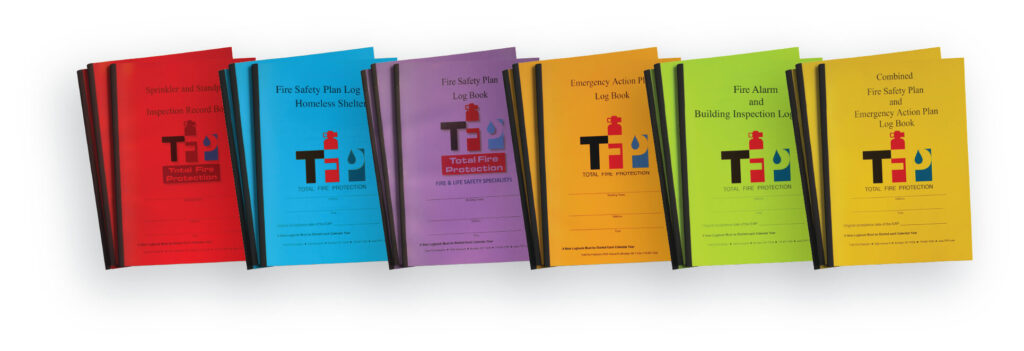
A Fire Log Book is far more than a simple checklist. Total Fire Protection’s 2025 Fire Log Books are designed to align directly with NFPA requirements, NYC Fire Code, and Local Laws such as LL26.
Each book provides structured pages for daily, weekly, monthly, and annual entries across multiple safety systems, including:
- Fire Alarm / Building Inspection Logs: Daily entries for system status, alarm activations, central station communications, and notification events.
- Elevator Testing: Instructions and monthly log sections to ensure compliance with elevator fire service testing.
- Exit Lights & Extinguishers: Monthly checks of egress signage, emergency lighting, and extinguisher accessibility.
- Generators & Smoke Control Systems: Dedicated logs for monthly generator runs, smoke and heat vent checks, and annual component inspections.
- Sprinklers and Standpipes: Weekly and monthly fire pump tests, annual inspections, and 3- and 5-year test schedules with deficiency reporting.
- Smoke Detectors: Semi-annual cleaning records, annual sensitivity testing, and repair or replacement documentation.
- Emergency Action Plan & Fire Safety Training: Sections for evacuation drills, staff training sessions, plan reviews, and amendments.
- After-Hours Fire Guard Requirements: Specialized logs for inspections of exits, trash accumulation, ignition sources, contraband, and standpipes.
Each log category ensures that your building can produce a clear, chronological record of compliance activities during any audit, inspection, or insurance review.
The NFPA Connection: Aligning with National Standards
The National Fire Protection Association (NFPA) sets the benchmark for inspection, testing, and maintenance across all fire protection systems. Codes such as NFPA 25, NFPA 72, and NFPA 101 define exactly when and how systems must be checked and documented.
For example:
- NFPA 25 requires weekly and monthly sprinkler inspections, as well as annual testing and multi-year performance checks.
- NFPA 72 requires smoke detector sensitivity testing at least once every two years, in addition to semi-annual cleaning.
- NFPA 101 (Life Safety Code) mandates ongoing egress inspections to ensure exits remain accessible and properly illuminated.
Fire Log Books are structured to align with these requirements, providing designated spaces for each test and inspection interval. By using them consistently, facility managers not only demonstrate compliance with NFPA standards but also streamline audit preparation and avoid unnecessary disruption.
NYC Fire Safety Compliance: Why Log Books Are Non-Negotiable
New York City enforces some of the strictest fire codes in the nation. Under FDNY rules, facilities are required not only to conduct inspections but also to maintain written proof that those inspections were completed. During FDNY site visits, one of the first items requested is the Fire Log Book.
Failure to provide complete, up-to-date entries can result in:
- Immediate violations and associated fines
- Mandatory correction periods requiring costly re-inspections
- Potential shutdowns for life safety hazards
- Increased liability exposure in the event of an incident
For property managers in NYC, Fire Log Books are not a convenience. They are a legal requirement. Having the proper 2025 editions ensures you are meeting the latest code expectations from the very first day of the year.
Common Violations That Fire Log Books Prevent
Many building owners and managers underestimate how quickly minor oversights can escalate into major violations. Fire Log Books help prevent issues by ensuring inspections are documented, deficiencies are tracked, and corrective actions are recorded.
Common violations that can be avoided include:
- Uninspected extinguishers or exit lights that appear to be in place but have no record of monthly checks.
- Sprinkler or standpipe deficiencies that are discovered but never logged, leaving no proof that they were identified and addressed.
- Missed fire alarm testing with no documentation of system communication or alarm activations.
- Incomplete evacuation drill records that leave occupants unprepared for emergencies.
- Unlogged after-hours inspections in facilities requiring fire guards, such as homeless shelters.
By recording each of these actions in the Fire Log Book, you create a documented trail of diligence that satisfies inspectors and significantly reduces legal and financial risk.
Fire Log Books as a Risk Management Tool
Beyond compliance, Fire Log Books provide significant operational and risk management benefits.
They serve as:
- Evidence for insurance claims: In the event of a fire, insurers require proof of maintenance. A completed log book strengthens your claim and reduces disputes.
- Accountability for staff: By requiring signatures and dates, log books ensure that assigned tasks are verifiably completed.
- Training resources: New facility staff can review past entries to understand inspection schedules and common system issues.
- Audit preparation: Organized log books eliminate last-minute scrambles before FDNY or third-party inspections.
These benefits make Fire Log Books not only a code requirement but also a practical business investment that supports long-term operational resilience.
The Cost of Non-Compliance vs. the Cost of Preparedness
The financial impact of failing to maintain proper Fire Log Books can be severe, especially in New York City where enforcement is strict and ongoing. Fines often range from hundreds to thousands of dollars per violation, and multiple infractions discovered during a single inspection can escalate costs quickly. Repeat offenses may lead to mandatory court appearances, civil penalties, or even temporary building closures that disrupt tenants and business operations. Beyond fines, non-compliance can also compromise insurance claims. In the aftermath of a fire, incomplete or missing documentation can weaken your ability to recover costs, leaving property owners and managers shouldering significant financial liability and reputational harm.
By contrast, Fire Log Books represent a modest, predictable investment that pays dividends in avoided penalties, reduced liability, and operational continuity. A single log book provides structured documentation for an entire year, ensuring inspections are properly recorded and deficiencies are addressed before they become violations. For property managers overseeing multiple facilities, the expense of equipping each building with updated 2025 Fire Log Books is negligible compared to the potential losses from a single compliance failure. More importantly, thorough documentation not only satisfies NFPA and FDNY requirements but also strengthens tenant trust, investor confidence, and overall risk management strategy.
Partnering with Total Fire Protection: Turning Compliance Into Confidence
Compliance is not achieved through equipment alone. It requires careful documentation, disciplined processes, and the assurance that every inspection and test is logged correctly. Fire Log Books form the foundation of this effort, but managing them effectively requires both the right tools and the right expertise. That is where Total Fire Protection provides value.
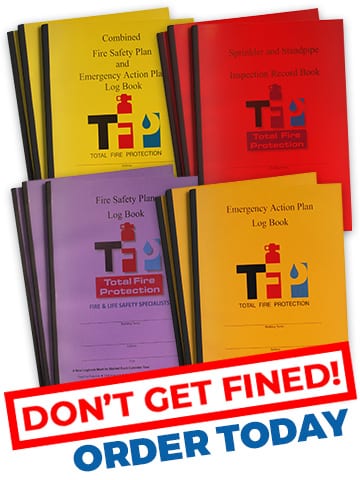
By supplying the official 2025 Fire Log Books tailored to NFPA standards and NYC fire code requirements, Total Fire Protection makes it simple for property managers, facility directors, and safety officers to stay ahead of inspections. Our team does more than deliver the books. We guide clients through the process of completing entries accurately, integrating log maintenance into daily operations, and ensuring documentation supports a broader compliance strategy.
Across the Tri-State area, property professionals rely on Total Fire Protection for timely delivery of Fire Log Books, expert guidance, and comprehensive inspection and maintenance services. Whether you oversee a single building or manage a multi-facility portfolio, our centralized documentation and compliance solutions save time, reduce risk, and provide peace of mind.